

How Much Do New Cabinets Cost? What Actually Affects the Price?
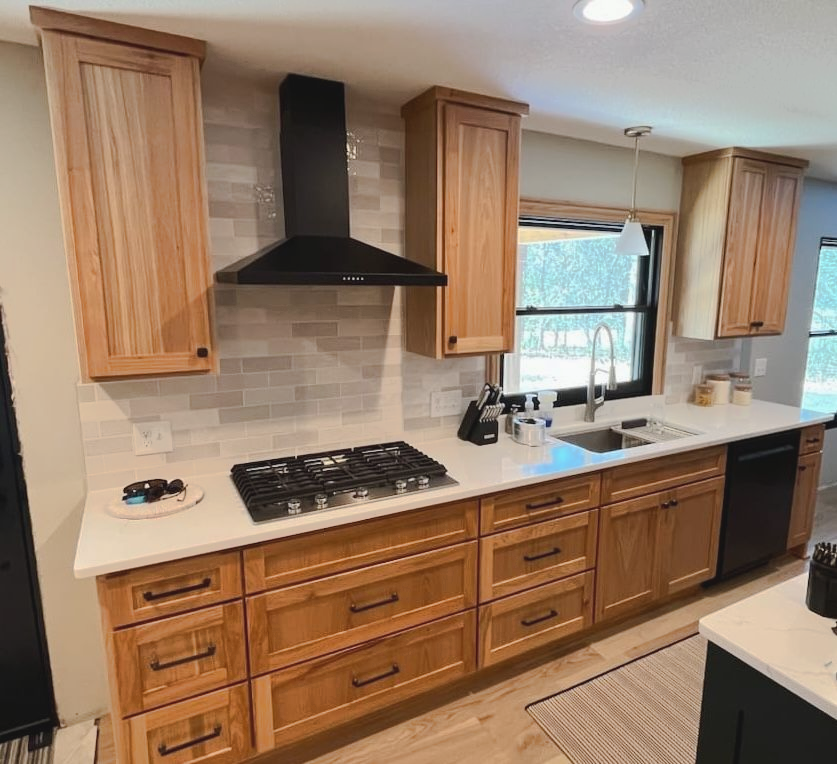
If you’ve started looking into new cabinets, you’ve probably discovered that getting a simple answer to “How much will cabinets cost?” isn’t so simple.
There isn’t one standard price for new cabinetry. Two projects with similar layouts can have very different costs depending on the type of cabinetry, materials, finishes, sizing, storage features, and what is included in the quote.
That’s true whether you’re planning a full kitchen, replacing a bathroom vanity, adding cabinetry to a laundry room or mudroom, or creating built-ins for another area of your home.
Rather than focusing on an average price that may have very little to do with your actual project, it’s more helpful to understand what affects cabinet pricing in the first place.
Why Is It So Hard to Give an Average Cost for Cabinets?
Cabinetry isn’t a single product with a standard price tag.
The size of the project is certainly part of the equation, but it’s far from the only factor. A smaller project with highly customized cabinetry and specialty features could cost more than a larger project using more standardized cabinet sizes and options.
Even within the same kitchen layout, changing the cabinetry collection, materials, door styles, cabinet configurations, or interior storage features can change the quote.
This is one reason broad online estimates for the “average cost of new cabinets” aren’t always particularly helpful. Your project may look nothing like the project used to calculate that average.
What Factors Affect the Cost of New Cabinets?
The Size and Scope of Your Project
Generally, more cabinetry means a higher overall cost. A large kitchen with an island, pantry cabinetry, and floor-to-ceiling storage will require more materials and labor than a single bathroom vanity.
But square footage alone doesn’t determine the price.
The number and type of cabinets matter, too. A wall filled with simple cabinet boxes is different from a space incorporating drawer bases, tall cabinets, appliance cabinetry, decorative details, or specialty storage.
That’s why two similarly sized rooms don’t necessarily result in similarly priced cabinetry.
Custom vs. Semi-Custom Cabinetry
The type of cabinetry you choose can have a significant impact on both price and flexibility.
Custom cabinetry is built specifically for a project, allowing greater flexibility with cabinet sizes, configurations, materials, finishes, and other details. Semi-custom cabinetry works within an established cabinet system, which limits some of those choices but can provide a faster and more streamlined option.
Neither is automatically the better choice. It depends on your space, priorities, timeline, and budget.
Twin River Cabinets offers both locally built custom cabinetry through our Casa, Signature, and Luxe collections and semi-custom cabinetry through Summit by TRC.
If you’re trying to decide between the two, read our guide to Custom vs. Semi-Custom Cabinets: What’s the Difference?
Do Materials and Finishes Affect Cabinet Price?
They can.
Wood species, painted or stained finishes, door styles, and other choices can all influence cabinet pricing—but exactly how they affect the price depends on the cabinetry collection you choose.
This is also why it’s important not to assume that one material or finish will always cost more than another.
For example, within Twin River Cabinets’ Signature Collection, the available wood species are priced the same regardless of whether the cabinetry receives a stain or painted finish. That means choosing one available wood species over another doesn’t automatically increase the cabinet price. Other collections are structured differently. Summit by TRC, for example, has four pricing tiers based on the style selected, while the Casa Collection and Luxe Collection each have their own material and finish options.
This is why broad pricing assumptions don’t always apply. Painted cabinetry may typically cost less than stained wood cabinetry, while certain wood species may cost more than others. The actual price difference depends on the cabinetry collection, materials, finish, and options available within that collection. The cabinetry collection itself—and the options available within that collection—can matter just as much as the individual material or finish you choose.
The better approach is to choose the cabinetry collection that fits what you want from the project and then explore the material and finish options available within it.
How Do Cabinet Features and Storage Options Affect Cost?
This is an area where a cabinet quote can change quickly—and often for good reason.
Pull-out storage, organizers, specialty cabinets, appliance garages, additional drawers, and other functional features all require additional materials, hardware, or construction.
Those upgrades increase cost, but they can also be some of the features homeowners appreciate most once they start using their cabinetry every day.
Instead of asking, “How many upgrades can we add?” it can be more useful to ask, "Which features will actually make this space work better for us?"
A pull-out that solves an everyday storage frustration may be worth investing in. A specialty feature you’ll rarely use may not be.
Does the Cabinet Layout Affect the Price?
Absolutely.
Cabinet pricing isn't determined only by the length of the wall. How that space is configured matters.
Drawer bases, tall pantry cabinets, finished end panels, specialty cabinetry, built-ins, and other configurations can affect the cost differently than standard cabinet boxes.
Custom cabinetry can solve spaces that don't work particularly well with standard cabinet dimensions. That flexibility may add to the project cost, but it can also eliminate awkward gaps and make better use of the available space.
This applies well beyond kitchens. Thoughtful cabinet sizing can make a significant difference in bathrooms, laundry rooms, mudrooms, home offices, bars, closets, and built-in storage areas.
Why Can Two Cabinet Quotes Be So Different?
This may be one of the most important things to understand when shopping for cabinets:
The number at the bottom of the quote doesn't tell you the whole story.
Before comparing two quotes, look at what each one actually includes.
Are delivery and installation included? What type of cabinet construction is being quoted? What hardware is included? Are the finishes included? Are there specialty cabinets or storage features? Are there allowances for products the cabinet company doesn't actually provide?
At Twin River Cabinets, delivery is included in our cabinetry quotes. Installation is included with our custom Casa, Signature, and Luxe projects. Summit by TRC is typically quoted without installation, although installation may be available.
Countertops are another example. Some companies may include a countertop allowance in their overall project quote. Twin River Cabinets does not sell countertops, so countertops are not included in our cabinetry pricing, although we're happy to provide referrals.
Knowing exactly what you’re comparing gives you a much clearer picture than comparing totals alone.
Are Custom Cabinets Always More Expensive?
Custom cabinetry will often require a larger investment because of the additional flexibility involved, but price shouldn't be the only reason to choose—or avoid—custom cabinets.
Some spaces benefit significantly from custom sizing. You may have an unusual wall dimension, want cabinetry to reach a particular height, need specialized storage, or have a very specific material or finish in mind.
Other projects work beautifully within semi-custom sizing and available options.
The question isn't simply, “Which one costs less?” It’s “Which cabinetry gives me what I need for this project?”
How Can You Keep a Cabinet Project Within Budget?
One of the best ways to control your cabinetry budget is to identify your priorities early.
Think about what matters most to you. Is it maximizing storage? A particular wood species? A painted finish? More drawers? Specialty organizers? Custom sizing? Staying within a certain timeline?
You don't necessarily need every available feature in every cabinet.
Investing strategically in the areas that will have the biggest impact on how you use the space can help you create cabinetry you love without adding features simply because they're available.
It can also be helpful to explore more than one cabinetry option. A project that doesn't require extensive customization may be a great fit for semi-custom cabinetry, while another space may benefit enough from custom sizing and options to make custom cabinetry worthwhile.
What Should You Ask When Comparing Cabinet Quotes?
If you're gathering quotes for new cabinetry, don't be afraid to ask what you're actually getting for the price.
A few useful questions include:
- What type of cabinet construction is included?
- Are delivery and installation included?
- What materials and finishes are included in the quote?
- What hardware comes standard?
- Which storage features or accessories are upgrades?
- Are there additional costs that aren't shown in the quote?
- Does the quote include products or allowances outside of the cabinetry itself?
The goal isn't necessarily to find the lowest quote. It's to understand the differences well enough to make a meaningful comparison.
So, How Much Should You Budget for New Cabinets?
The most accurate answer is going to come from your actual project.
A kitchen, bathroom, laundry room, mudroom, bar, office, closet, or built-in project can each have completely different cabinetry needs. Even two kitchens of similar size can have very different prices once the layout, cabinetry, materials, and features are considered.
Instead of relying too heavily on an online average, start with the space you have, what you want the cabinetry to accomplish, and the amount you're comfortable investing.
From there, you can explore the cabinetry options that make the most sense for your project.
Frequently Asked Questions About Cabinet Costs
What makes cabinets more expensive?
The size and complexity of the project, cabinetry type, materials, finishes, specialty sizing, storage features, accessories, and installation can all affect the final cost.
Is semi-custom cabinetry less expensive than custom cabinetry?
Semi-custom cabinetry is often a more budget-friendly option because it works within established sizes and selections. However, the actual difference depends on the cabinetry being compared and the details of the project.
Do pull-outs and cabinet organizers cost extra?
Specialty storage features generally add to the cost of cabinetry because they require additional components, hardware, or construction. Choosing the features that solve real storage needs can help you decide where those upgrades are worthwhile.
Can I get an accurate cabinet price without a finalized layout?
A preliminary conversation can help establish which cabinetry options may fit your project, but an accurate quote requires enough information about the space, layout, cabinetry, and selections to determine what will actually be needed.
Understanding Your Cabinet Quote
There’s no universal number that tells you what new cabinets should cost. The more useful question is whether the cabinetry you're considering provides the quality, functionality, appearance, and flexibility you want at a price that makes sense for your project.
At Twin River Cabinets in White Bear Lake, Minnesota, we offer multiple cabinetry collections so homeowners throughout the Twin Cities can find the right fit for their space, priorities, and budget.
Whether you're planning cabinetry for a kitchen, bathroom, laundry room, mudroom, bar, office, closet, or another area of your home, understanding what goes into the quote is the best place to start.