

Before You Choose a Cabinet Color: How Lighting Changes Painted Cabinetry
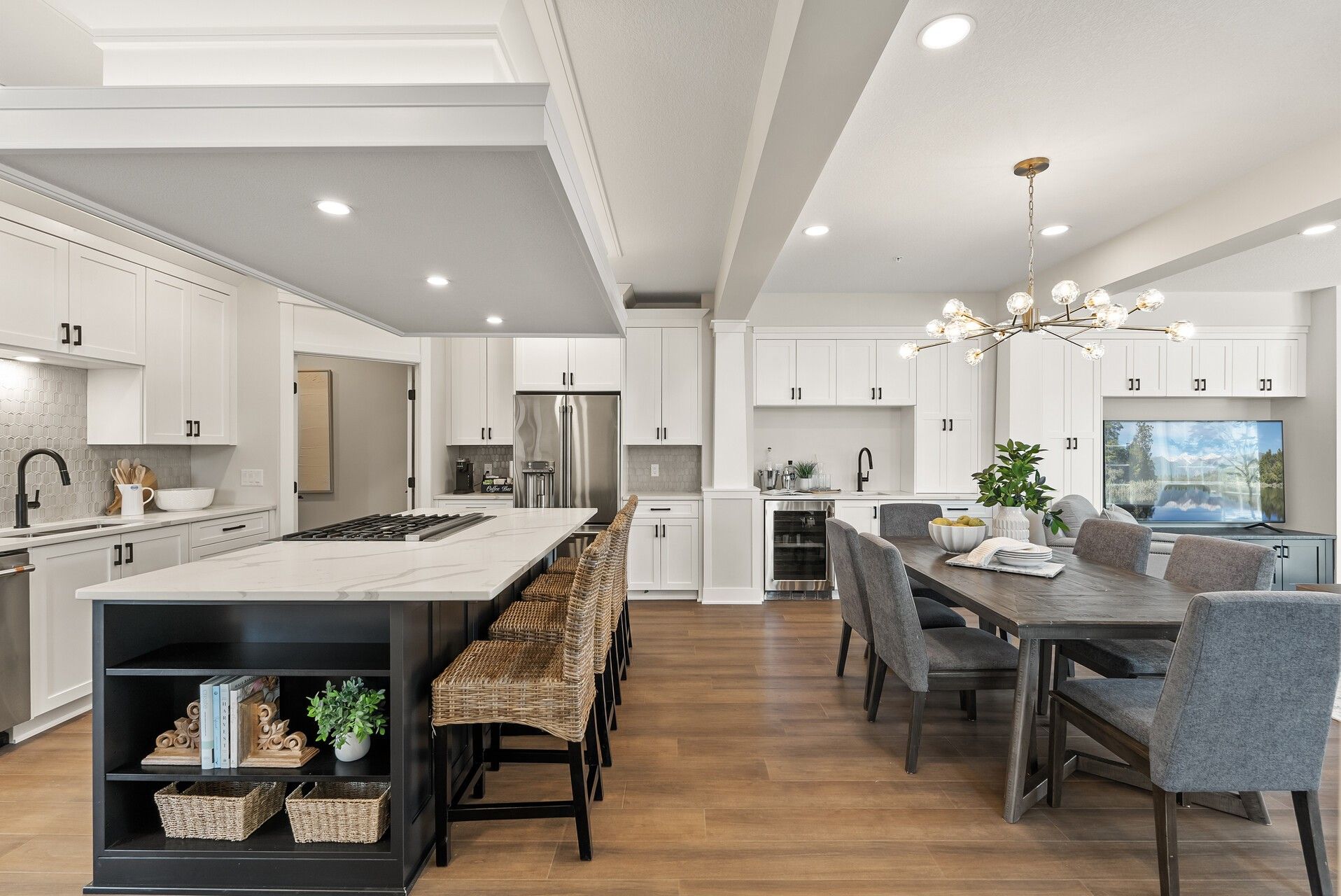
Choosing a cabinet color can be one of the most fun parts of a project—and one of the most frustrating!
You find the perfect white, green, blue, greige, and you love it on the sample. Then you bring it into your space and think, Wait. Is this even the same color?
It probably is.
The difference may be the light.
Natural light, artificial lighting, the direction your room faces, and even the time of day can change the way a painted cabinet color looks. Add flooring, countertops, wall colors, tile, and other finishes, and a color can look surprisingly different from one space to another.
That's why there really isn't one "perfect white" or one cabinet color that works everywhere.
Before choosing a color for your painted cabinetry, here are a few things worth paying attention to.
Start With the Natural Light in Your Room
First, look at where your natural light is coming from.
If you aren't sure which direction your room faces, open the compass on your phone and check the direction of the room's primary windows. It sounds like a tiny detail, but it can explain a lot about why a color looks different in your home than it did somewhere else.
North-Facing Rooms
North-facing rooms typically have softer, cooler natural light.
That cooler light can make gray, blue, and green undertones more noticeable. Whites can also appear cooler than expected.
This doesn't mean you can't choose a cool color for a north-facing room. It simply means you should pay attention to those undertones before committing.
If you're considering white cabinetry, this is a great place to compare colors rather than looking at one white by itself. Put something like Pure White SW 7005 next to the warmer Alabaster SW 7008 and see what happens in your room.
You may immediately prefer one over the other.
South-Facing Rooms
South-facing rooms tend to receive brighter, warmer natural light for much of the day.
That warmth can bring out the warmer undertones in your cabinet color. A creamy white may look creamier. A warm neutral may feel warmer. Even greens, blues, and grays can change depending on how much sunlight reaches the cabinetry.
Again, there's no rule saying a south-facing room needs a certain type of color. The important thing is recognizing that the warmth you're seeing isn't coming from the paint color alone—the light is contributing to it.
East-Facing Rooms
East-facing rooms can be a little trickier because their light changes noticeably throughout the day.
You'll typically get warmer, brighter light in the morning, followed by cooler, less direct light later in the day.
So if you fall in love with a cabinet color at 9 a.m., look at it again at 3 p.m.
And then again after dark.
You might be surprised by how different it looks.
West-Facing Rooms
West-facing rooms do almost the opposite.
They generally start with cooler light and become warmer and brighter later in the day as the afternoon and evening sun comes through.
This is another situation where we'd never recommend judging a cabinet color based on one quick look at a sample.
Leave it in the room for a while. See what happens to it throughout the day.
What If There Isn't Much Natural Light?
Not every cabinet project involves a bright room full of windows.
Think basement bars, laundry rooms, bathrooms, offices, entertainment centers, mudrooms, built-ins, and other spaces that may have limited natural light—or none at all.
In those rooms, artificial lighting becomes even more important.
You've probably noticed this without even thinking about cabinetry. Some light bulbs create a warm, almost yellow glow. Others produce a much cooler, whiter light.
Your cabinet color is going to react to that light, too.
If you're planning cabinetry for a room with limited natural light, consider the lighting that will actually be used in the finished space. If you change the color temperature of the bulbs later, don't be surprised if the cabinetry suddenly looks a little different.
White Is Never Just "White"
If you've ever started looking at white paint colors, you already know where this is going.
There are a lot of whites!
Some are warm. Some are cool. Some lean creamy. Some have gray undertones. And sometimes you don't notice any of that until you put two whites next to each other.
For example, compare Pure White SW 7005, Alabaster SW 7008, and Snowbound SW 7004.
At first glance, you're looking at three whites.
Put them next to each other in the actual room, though, and the differences become much easier to see.
Then move those same samples into another room and they may look different again.
That's why we wouldn't tell someone, "This is the best white for cabinets." There are too many other factors involved.
The better question is: Which white looks best with the light and other finishes in your space?
You Don't Have to Choose White
Painted cabinetry opens the door to a lot more than white! Maybe you're drawn to a soft, muted green like Evergreen Fog SW 9130. Maybe you want something deep and dramatic like Naval SW 6244 or Iron Ore SW 7069. Or maybe a warm neutral like Accessible Beige SW 7036 feels more like you.
The point is that every one of those colors will be affected by its surroundings.
A green may look more gray in one room and more obviously green in another. A dark color may feel rich and dramatic in a bright room but considerably darker in a space with limited light.
Don't choose based solely on how beautiful the color looks online. Bring it home and see.
Don't Forget Everything Around the Cabinets
Light is a big part of choosing a cabinet color, but it isn't the only thing affecting what you see.
Your cabinetry has neighbors. Flooring, countertops, tile, wall color, wood tones, furniture, appliances, and even nearby cabinetry can change the way your eye perceives a color.
This becomes especially noticeable with undertones.
A white that looked perfectly neutral by itself might suddenly look warmer next to a cool countertop. A greige may reveal more gray beside warm wood flooring. A green may look completely different once your backsplash is next to it.
Whenever possible, look at your cabinet color with the other materials you're actually planning to use.
The Best Thing You Can Do? Live With the Sample for a Little While.
This may be the simplest advice: Don't rush the sample.
Take it into the room where the cabinetry will actually be installed.
Look at it in the morning. Look at it in the afternoon.
Turn the lights on. Look at it after dark.
Hold it next to your flooring, countertop, tile, or other finishes. Move it to different areas of the room if cabinetry will be installed in more than one location.
If you still love it after seeing it under all those different conditions? That's a much better indication that you've found your color than how it looked on your phone or under showroom lighting.
Your Cabinet Color Should Work in Your Space
There isn't a formula that says north-facing rooms need one color and south-facing rooms need another.
Color is personal. Your home is different from the house you saw on Pinterest. Your lighting is different. Your flooring is different. And you may absolutely love a color someone else would never choose.
Our Casa Collection is built specifically for painted cabinetry, with Sherwin-Williams colors and custom color matching available. That gives you a lot of freedom to find a color that works with your space instead of choosing from a tiny predetermined palette.
Whether those cabinets are going into a kitchen, bathroom, laundry room, mudroom, basement, office, bar, built-in—or somewhere completely different—the same advice applies: Don't choose a cabinet color based only on the color itself.
Look at the light. Look at what's around it. And most importantly, look at it in your space.