

Sherwin-Williams' 2027 Color of the Year:
Does Celery Belong on Your Cabinets?
Every year, paint companies introduce colors they believe will influence home design, and Sherwin-Williams' 2027 Color of the Year is already giving homeowners something to talk about.
Meet Celery SW 6421, a light, herbal green with subtle yellow undertones. It's fresh, nature-inspired, and certainly different from the whites, grays, and warm neutrals we've seen dominate interiors over the years.
But does that mean Celery belongs on your cabinets?
It certainly can, but it depends on your space, your style, and how much color you want to incorporate. Celery could make a statement on a bathroom vanity, add personality to laundry room cabinetry, or serve as a refreshing wall color alongside natural wood cabinets. And if this particular shade of green isn't your favorite, there are plenty of other ways to bring green into your home.
Let's look at what makes Celery unique, where it might work best, and what to consider before choosing a trending color for your cabinetry.
What Is Sherwin-Williams' 2027 Color of the Year?
Sherwin-Williams selected Celery SW 6421 as its 2027 Color of the Year, highlighting a growing interest in colors inspired by nature.
Unlike deeper forest greens or gray-toned sages, Celery has a lighter, warmer appearance. Its yellow undertones give it a fresh, almost botanical quality that can look quite different depending on the surrounding colors and lighting.
That distinction matters when considering cabinetry.
A color that feels soft and subtle on a small paint sample can have a much stronger presence when applied across an entire wall of cabinets. Likewise, a shade that initially seems unusual might feel completely different when paired with natural wood, warm neutrals, or complementary finishes.
Curious what Celery looks like in a finished space? Sherwin-Williams has shared realistic room inspiration featuring Celery-painted cabinetry.
Would Celery Work for Cabinetry?
Yes, Celery can work for cabinetry, particularly when the rest of the space is designed to complement its warm green undertones. The bigger question is whether it's the right color for your cabinetry.
Cabinets are a substantial part of a room's design. Unlike smaller decorative accessories, they aren't something most homeowners plan to change every few years.
Before choosing Celery or any trending cabinet color, consider how much of it you want to see every day.
A single bathroom vanity painted green creates a different effect than an entire kitchen filled with green cabinetry. Neither is necessarily right or wrong, but the amount of color can make a significant difference.
And remember, you don't have to paint your cabinets green to enjoy the color in your space!
Celery Cabinets or Celery Walls: Which Looks Better?
One of the most interesting things about color is how much its placement changes a room.
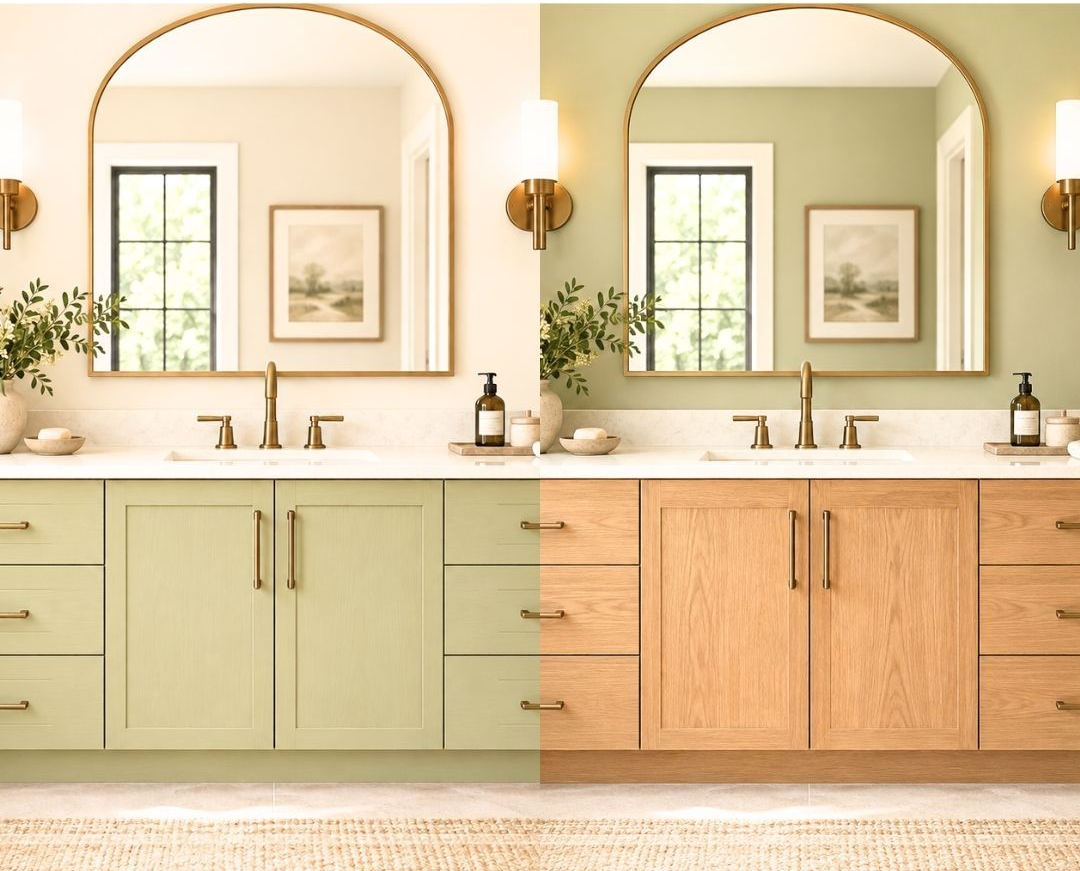
Take a bathroom vanity, for example. Imagine the same bathroom with two different approaches.
Option A: Celery-Painted Vanity With Neutral Walls
Painting the vanity Celery makes the cabinetry the focal point.
With neutral walls, a light countertop, and warm metal hardware, the green introduces personality without requiring color throughout the entire room.
This approach could work especially well for homeowners who want a distinctive vanity or enjoy bringing unexpected colors into smaller spaces.
Option B: Natural Wood Vanity With Celery Walls
Now imagine keeping the cabinetry in a natural White Oak finish and moving Celery to the walls.
The room takes on a different character. The wood grain becomes a prominent design feature, while the green provides a colorful backdrop.
For homeowners who love natural wood cabinetry but still want to experiment with color, this can be an appealing alternative.
There's also a practical consideration: walls are generally easier to repaint than cabinetry. If your preferences change in a few years, updating the wall color is typically a simpler project than refinishing cabinets.
Image note: Images are conceptual AI-generated renderings inspired by Celery SW 6421, not completed Twin River Cabinets projects or exact paint-color reproductions.
Neither approach is automatically better. The right choice depends on which elements you want to stand out and how comfortable you are committing to color.
Where Could Celery Work Best in Your Home?
While kitchens often receive the most attention when discussing cabinet colors, they're far from the only place to incorporate green.
Bathroom Vanities
Bathrooms offer an opportunity to experiment with color on a smaller scale. A Celery-painted vanity could bring a fresh, playful element to an otherwise neutral bathroom, especially when paired with warm wood accents and natural textures.
Laundry Room Cabinets
Laundry rooms are another space where homeowners may feel comfortable trying something different.
Green cabinetry could add personality to a practical room, while natural wood cabinets against Celery-colored walls offer a softer alternative.
Mudroom Built-Ins
Mudrooms often combine cabinetry, benches, cubbies, and storage. A distinctive paint color can help these functional features feel like an intentional part of the home's design.
Celery could work as an accent, although homeowners who prefer a more grounded look might gravitate toward olive or deeper earthy greens.
Kitchen Islands and Accent Cabinets
If you like Celery but aren't ready for an entire kitchen in that shade, an island or separate beverage area could be a way to introduce it.
Pairing painted accent cabinetry with natural wood or neutral perimeter cabinets can create contrast without making the color the dominant feature of the kitchen.
What Colors and Materials Pair Well With Celery?
Because Celery has warm yellow undertones, the surrounding materials can significantly influence its appearance.
Some combinations worth exploring include:
- Natural White Oak: Adds warmth and texture while creating an organic, nature-inspired look.
- Warm Whites and Creams: Keep the space light without introducing the stark contrast of a cooler white.
- Light Stone Countertops: Provide a neutral surface that allows the cabinetry or wall color to stand out.
- Brass or Bronze Hardware: Complements the warmer character of the green.
- Deeper Wood Tones: Introduce contrast and help balance Celery's lighter appearance.
Sherwin-Williams also offers an official coordinating color palette for homeowners who want to explore complementary shades.
One important consideration is lighting.
Natural daylight, warm artificial lighting, and cooler light sources can all change how a green appears. Celery's yellow undertones may become more noticeable in certain conditions.
Before committing, look at actual paint samples in the room at different times of day. A screen or digital rendering can provide inspiration, but it shouldn't replace seeing the color in person.
Love Green, but not Celery? Consider These Alternatives
Green cabinetry isn't limited to one shade, and you certainly don't have to choose the Color of the Year to incorporate green into your home. If Celery feels a little too light or yellow-toned for your taste, there are other directions worth considering.
Sage Green
Sage generally has a softer, more muted appearance, often with gray undertones. It can feel understated and pairs beautifully with natural wood and neutral finishes.
Olive Green
Olive offers a warmer, earthier direction. Depending on the shade, it can feel rich and grounded without being overly dark.
Evergreen and Forest Green
Deeper greens create a more dramatic appearance. They can work particularly well on bathroom vanities, built-ins, bars, or accent cabinetry where homeowners want a stronger statement.
The important thing is finding the right undertone and depth for your space.
A homeowner who loves green may still strongly prefer one shade over another, and that's exactly why color selection should be personal rather than trend-driven.
Should You Choose a Trending Color for Your Cabinets?
There's nothing wrong with choosing a popular cabinet color. Many trends reflect broader changes in how homeowners want their spaces to look and feel.
But popularity alone isn't a reason to choose a finish you'll be living with for years.
Before making a decision, ask yourself:
- Would I still be drawn to this color if it weren't trending?
- Does it complement the flooring, countertops, and other permanent finishes?
- How does it look in my home's actual lighting?
- Do I want this color on the cabinetry itself, or would I prefer it on the walls?
- Will I enjoy seeing this much color every day?
If you love a particular shade and it works with your home, there's no reason to dismiss it simply because it's trendy.
On the other hand, if you're unsure, you don't need to force it. Natural wood, classic neutrals, and more muted colors can be just as beautiful.
The goal isn't to create a room that looks like everyone else's. It's to create one that feels right for you.
Can Twin River Cabinets Create Cabinetry in a Trending Paint Color?
Yes! Twin River Cabinets offers painted cabinetry with color-matching options through our locally built custom collections.
Our Casa Collection focuses on painted cabinetry, while our Signature Collection offers both natural wood and painted options. This gives homeowners flexibility to explore different finishes depending on their project and preferences.
Whether you're considering a Celery-inspired vanity, a muted sage laundry room, or natural White Oak cabinetry paired with colorful walls, the design should start with how you want the space to look, function, and feel.
Color is only one part of the decision. Cabinet construction, storage, layout, materials, and long-term functionality matter just as much.
Frequently Asked Questions About Celery and Green Cabinetry
Is Celery a good color for bathroom cabinets?
Celery could be a good choice for a bathroom vanity, particularly when paired with neutral walls, warm hardware, and complementary countertops. Its lighter green appearance can introduce color without using a very dark or saturated shade.
Does Celery work with natural wood cabinets?
Yes. Celery's warm undertones can complement natural wood, including White Oak. Using Celery on the walls with natural wood cabinetry is one way to incorporate the color without painting the cabinets themselves.
Is green cabinetry going out of style?
Green continues to appear in residential design, but individual shades will rise and fall in popularity. Rather than choosing a green solely because it's trending, focus on a shade that complements your home and personal preferences.
Can cabinets be painted to match a Sherwin-Williams color?
Twin River Cabinets offers color-matching options within its custom painted cabinetry collections. Exact color and finish selections should be confirmed during the design process.
A Color of the Year Can Inspire Your Home, but It Doesn't Have to Define It
Sherwin-Williams' Celery is an interesting reminder that home design continues to move beyond traditional neutrals.
Some homeowners will love its fresh, yellow-green character. Others will prefer deeper, earthier greens—or decide that natural wood cabinetry with colorful walls is the better fit.
And that's what makes designing a home personal.
At Twin River Cabinets in White Bear Lake, Minnesota, we help homeowners throughout the Twin Cities explore cabinetry options that fit their spaces, preferences, and everyday needs.
Whether you're inspired by the latest color trends or looking for something more timeless, the best choice is one you'll enjoy living with long after the Color of the Year changes.