

Rift Sawn vs. Quarter Sawn vs. Plain Sawn Oak Cabinets
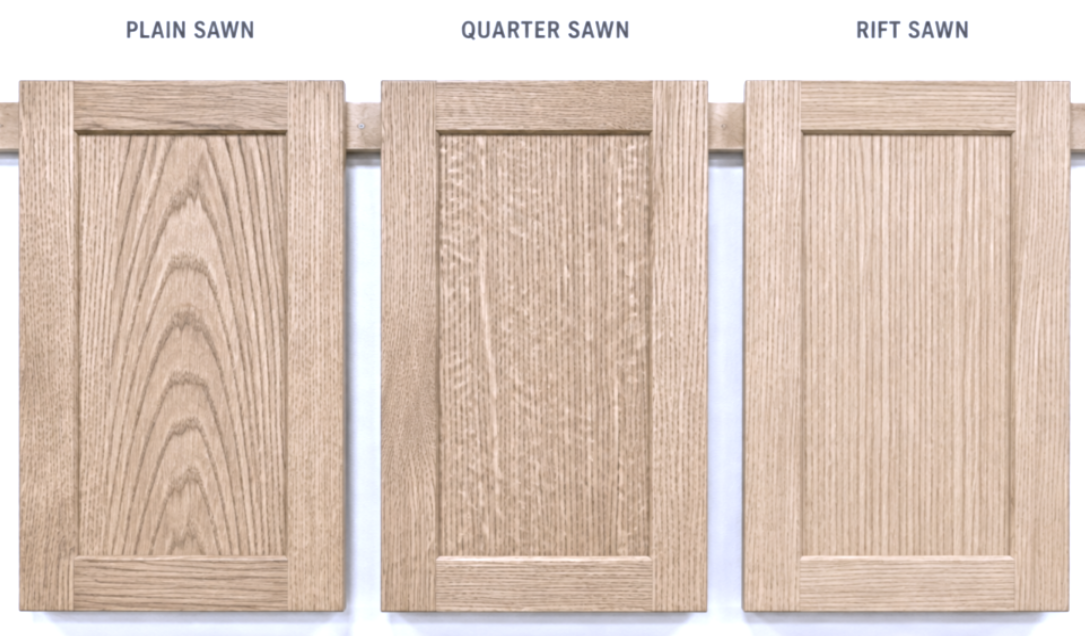
You know you love Oak cabinetry. You find an inspiration photo with exactly the clean, straight grain you've been picturing, so you choose Oak for your project…and then see another Oak cabinet door that looks completely different.
What's going on?
The answer may not be the species at all. It may be how the Oak was sawn.
At Twin River Cabinets, we offer both Red Oak through our Signature Collection and premium White Oak through our Luxe Collection. But choosing Red Oak or White Oak is only part of the conversation. How the lumber is cut from the log can dramatically change the grain pattern you see on the finished cabinetry.
If you're considering Oak cabinetry, understanding the difference between plain sawn, quarter sawn and rift sawn Oak can help you recognize which look you're actually drawn to.
Read
Best Wood Species for Cabinets: How to Choose the Right One
View
Signature Collection
View
Luxe Collection
First, What Does "Sawn" Mean?
It sounds technical, but the basic idea is pretty simple.
When a log is milled into boards, it can be cut at different angles in relation to the tree's growth rings. Those different cutting methods expose the wood grain differently.
So while the tree hasn't changed, the part of its natural grain you see on the face of the board has.
That's why the same Oak species can have sweeping, curved grain on one cabinet door and much straighter, more uniform grain on another.
What Is Plain Sawn Oak?
Plain sawn, sometimes called flat sawn, is the most common method of cutting hardwood lumber. It produces more usable lumber from the log and generally allows for wider boards, making it the most cost-effective of the three methods.
What Does Plain Sawn Oak Look Like?
This is probably the Oak grain most people recognize.
Plain sawn Oak often has arching or cathedral-shaped grain patterns, along with areas of straighter grain. The result is plenty of visible movement and natural variation.
On cabinetry, that means the wood itself becomes a noticeable part of the design.
Consider plain sawn Oak if: you love obvious wood grain, natural movement and the classic character associated with Oak cabinetry.
What Is Quarter Sawn Oak?
Quarter sawing changes the orientation of the cut. The log is divided into quarters and then cut so the growth rings are more perpendicular to the face of the board.
This produces a straighter, more vertical and uniform grain pattern than plain sawn lumber. It also produces fewer and narrower boards from each log, making the process more involved and typically more expensive.
But Oak has another interesting characteristic when quarter sawn...
What Are the Flecks in Quarter Sawn Oak?
Those aren't imperfections.
Oak contains natural rays that can become much more visible when the lumber is quarter sawn, creating distinctive markings commonly called ray fleck. Both Red and White Oak can display these markings, although they can be especially pronounced in quarter-sawn White Oak.
For some homeowners, those flecks are exactly what makes quarter-sawn Oak beautiful. Others prefer a cleaner grain without them.
Consider quarter sawn Oak if: you like straighter grain but also appreciate distinctive natural figuring and character.
What Is Rift Sawn Oak?
Rift sawing is often the choice behind those Oak cabinets with the exceptionally clean, straight grain you see in contemporary cabinetry.
With rift sawing, the growth rings meet the face of the board at an angle that creates a very consistent vertical grain pattern. The process produces narrower boards and more waste than plain sawing, so rift-sawn lumber is more limited and typically comes at a premium.
What Does Rift Sawn Oak Look Like?
Think straight, linear and consistent.
Compared with plain sawn Oak's cathedral grain and quarter sawn Oak's visible ray fleck, rift sawn Oak tends to have less dramatic figuring across the face.
That makes the natural wood feel quieter without removing the beauty and texture of Oak.
Consider rift sawn Oak if: you're drawn to clean, straight grain and want the warmth of real wood with a more refined, consistent appearance.
Rift Sawn vs. Quarter Sawn Oak: Aren't They Basically the Same?
This is where homeowners can easily get confused because both can appear much straighter than plain sawn Oak.
The biggest visual distinction is often figure.
Quarter-sawn Oak can prominently expose the tree's natural rays, producing the flecking or figuring discussed above. Rift sawing creates the straighter grain while minimizing much of that prominent ray fleck.
So if the inspiration photos you've saved feature extremely straight-grained White Oak without much visible figuring, there's a good chance you're responding to the look associated with rift sawn White Oak, rather than simply White Oak in general.
That's an important distinction when you're choosing cabinetry.
Is One Cut Better Than the Others?
Not necessarily.
Quarter- and rift-sawn boards do offer greater dimensional stability than plain-sawn boards, but properly prepared plain-sawn hardwood performs well in cabinetry, too.
For most homeowners choosing TRC cabinetry, we think the more useful question is:
Which grain pattern do you want to see every day?
If you love sweeping cathedral grain, choosing rift sawn simply because it sounds more premium would be the wrong choice.
Likewise, if every inspiration photo you've saved features clean, linear Oak, traditional plain sawn Oak may not give you the appearance you're picturing.
This is primarily a design decision, not a contest with one winner.
Red Oak vs. White Oak Matters, Too
The cut of the lumber isn't the only thing affecting the finished appearance.
TRC offers Red Oak in our Signature Collection, where its bold, open grain brings warmth, texture and classic wood character to custom cabinetry.
Our Luxe Collection offers White Oak, which has clean, organic grain and softer natural tones. The Luxe collection guide itself shows White Oak in both flat-sawn and quarter-sawn examples, and the difference in grain is easy to see.
So your decision isn't simply:
What kind of Oak do I want?
It's really a combination of Oak species + cut + finish.
And those three decisions work together to create the final appearance.
Don't Forget About the Finish
Just like different wood species respond differently to stain, different grain patterns can become more or less noticeable depending on the finish you choose.
Lighter and more natural finishes often allow Oak's grain to remain front and center, while deeper stains can create more contrast and dramatically change its overall appearance.
That's why we recommend looking at actual samples rather than choosing from a photograph alone. Lighting and surrounding finishes can also affect how the wood looks once it's in your home.
Frequently Asked Questions About Sawn Oak Cabinets
Is rift sawn Oak the same as quarter sawn Oak?
No. Both create straighter grain than plain sawing, but they're cut at different angles. Quarter-sawn Oak can show prominent natural ray fleck, while rift-sawn Oak typically creates a cleaner, more consistently straight-grained appearance.
Why is rift sawn Oak more expensive?
Rift sawing produces narrower boards and more waste from the log than plain sawing, making the lumber less readily available and more costly to produce.
What is the difference between flat sawn and plain sawn Oak?
For purposes of choosing cabinetry, you'll often see the terms flat sawn and plain sawn used for the familiar cut that produces Oak's sweeping, cathedral-style grain.
Which Oak cut has the straightest grain?
Rift sawn Oak is typically chosen when a clean, straight and consistent grain appearance is the goal.
Does TRC offer different cuts of Oak?
Yes. Different sawn options are available for TRC Oak cabinetry. Red Oak is available through our Signature Collection, while premium White Oak is available through Luxe. Available options can vary by project, so our team can help you compare the appropriate species, cut and finish.
See Oak Before You Choose It
Oak is a perfect example of why the name of a wood species only tells you part of the story.
Plain sawn, quarter sawn and rift sawn Oak can each create a very different finished look. Add the differences between Red Oak and White Oak, plus your stain or finish selection, and there are plenty of ways to make Oak cabinetry feel completely your own.
The best way to choose? Contact us to set up an appointment to visit the showroom and see the wood, grain and finish together.